Baphalali Eswatini Red Society is a humanitarian organization with a national wide network of three clinics and five divisions under which there are branches, members and volunteers.
History
Baphalali Eswatini Red Cross Society was established in 1933 as a branch of the British Red Cross Society and be- came independent in 1970, through Parliament Act No. 41. The then Patron His Majesty King Sobhuza II name it Baphalali Swaziland Red Cross Society.
It was admitted to the International Committee of Red Cross (ICRC) and the International Federation of Red Cross and Red Crescent Society (IFRC) in 1979.
DISASTER MANAGEMENT
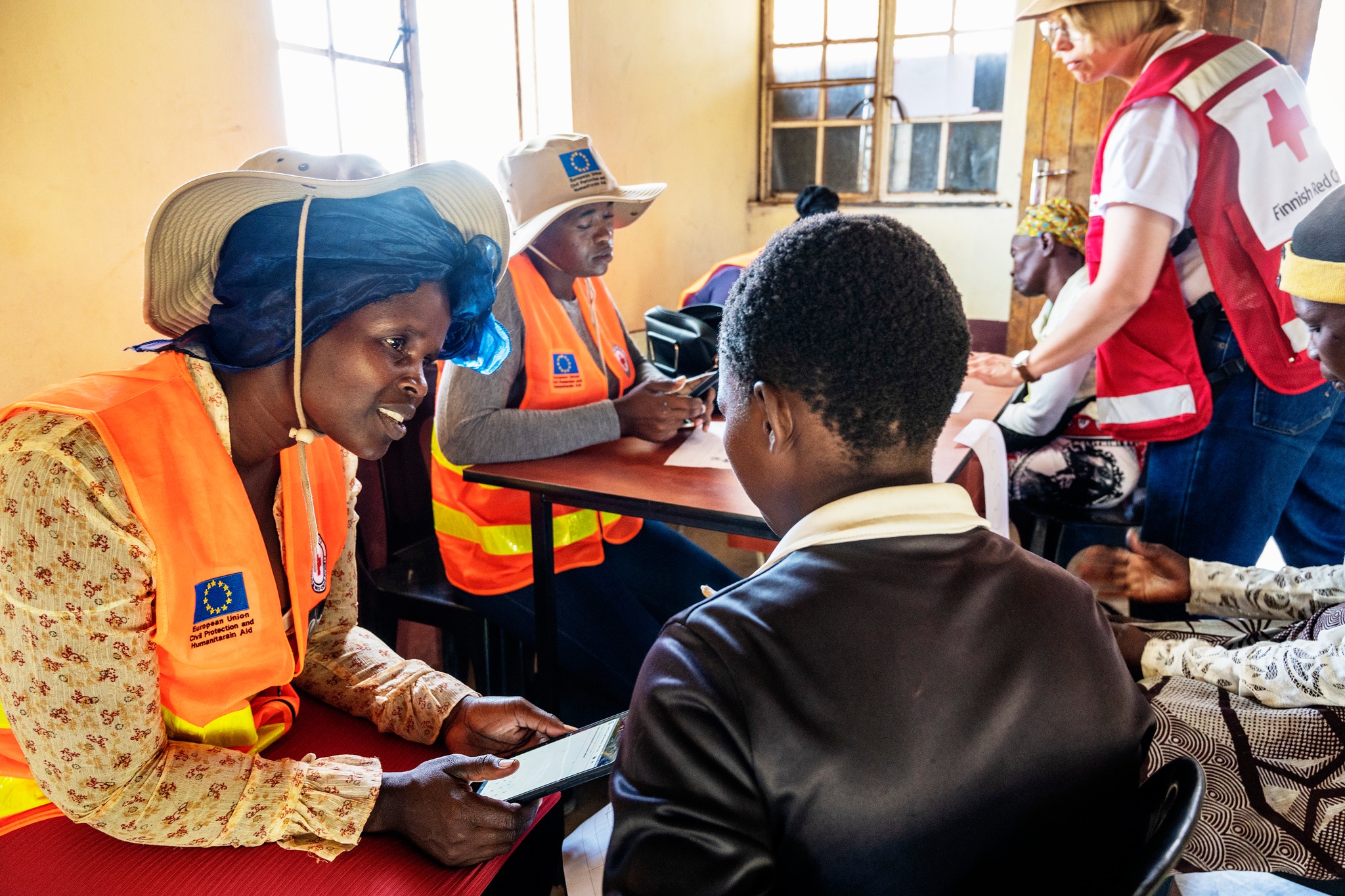
The Deputy Prime Minister’s Office is the overall responsible Minis- try for coordinating and managing disasters in Eswatini. The declara- tion of disaster lies with this Ministry. BERCS being a key stakehold- er in the management of disasters in Eswatini as enshrined in various legal instruments plays a major role in disaster preparedness, re- sponse, risk reduction, climate change, and recovery as well as coor- dination and management.
Restore Family Links and Tracing
Tracing of relatives and exchanging family news on behalf of sepa- rated next of kin through coordination of International Committee of the Red Cross.
Youth Programme
The youth facilitate and compliment most of the voluntary commu- nity services, which are provided by the NS. They are trained and given life skills to enable them to be responsible citizens.
National Society Development
The National Society strengthens branches through recruitment, retention and capacity building of volunteers and members in communities.
FIRST AID SERVICES
In the mid-19th century, the First International Geneva Convention was held and the Red Cross was created to provide “aid to sick and wounded soldiers in the field.” Soldiers were trained to treat their fellow soldiers before the medics arrived.
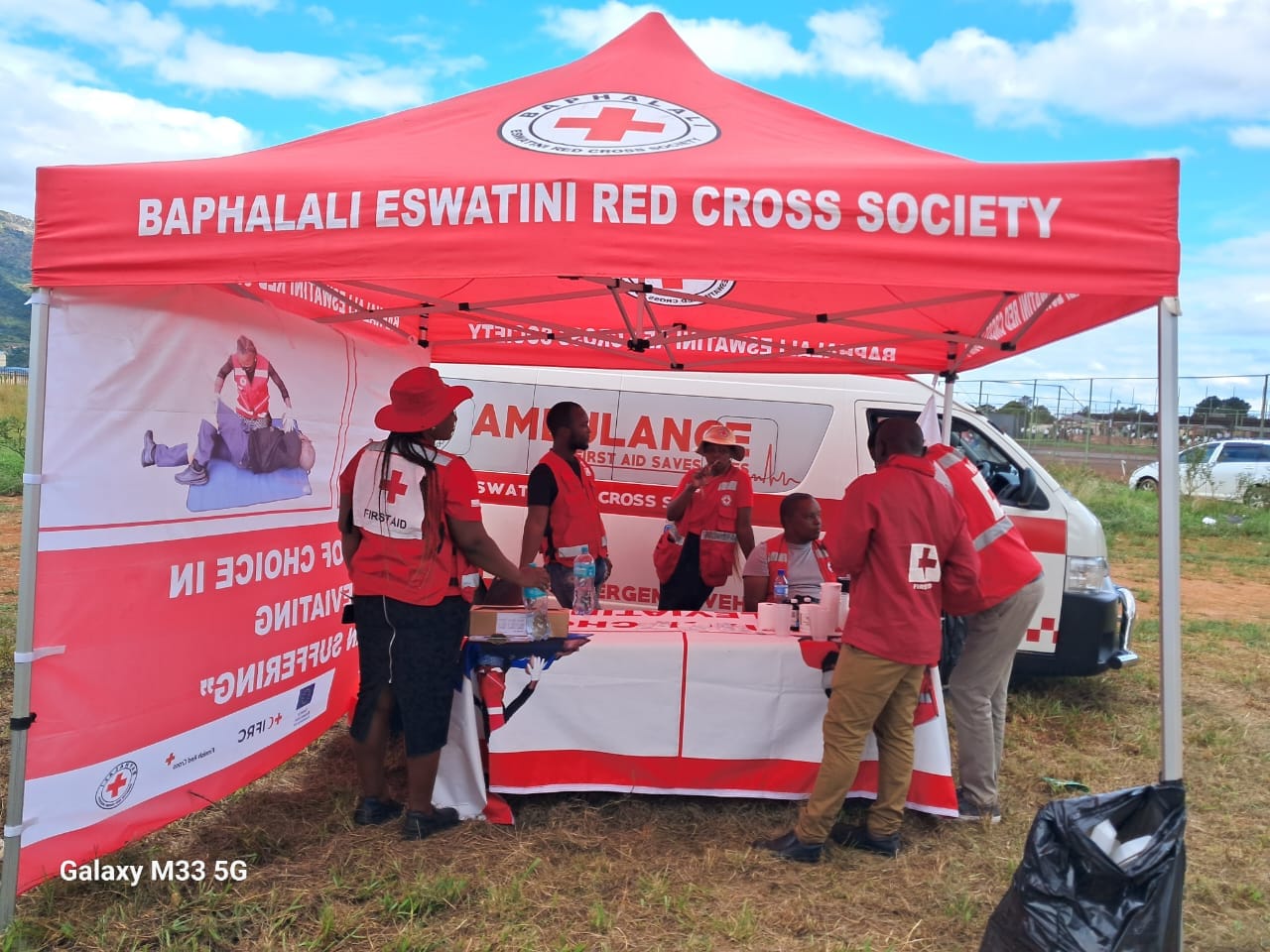
Provision of commercial First Aid training to individuals, communi- ties and companies. The NS also render First Aid Services during public and national events. First Aid Kits are available at a fee in all Red Cross divisions/regional offices.
HEALTH CARE SERVICES
Primary Health Care
The NS operates three clinics at Sigombeni (Manzini Region), Mah- walala (Hhohho Region) and Silele (Shiselweni Region)
Home Based Care
The NS volunteers take care of the chronically and terminally ill at home.
HIV/AIDS
Fighting against HIV/AIDS through prevention, care, support treat- ment and capacity building.
Information dissemination
Raising awareness on basic International Humanitarian Law (IHL), fundamental principles, activities and humanitarian values of the Red Cross Movement, so they may be understood, accepted and
respected.
Resource Development.
Its main purpose is to assist the National Society become self-sustaining, that is, to generate a financial muscle to keep all projects and programmes running.